A millennial gesture in four stages. From wax modeling to final patina, a journey into the making of a bronze.
« Enfant, on joue avec l'argile et en grandissant, on crée. »
In ancient times, after the harvests, people sculpted to enrich society with works of art. The work was first done only in clay, then the discovery of wax progressively improved the technique.
It was while working iron that the possibility to melt metal into liquid was discovered. Legend says that a child inspired the idea of pouring metal into a mold. This practice concerned iron and copper first, before evolving toward bronze.
Learning begins with observation. A master transmits the technique, then the apprentice practices it with the materials. That's how curiosity and creative spirit develop.
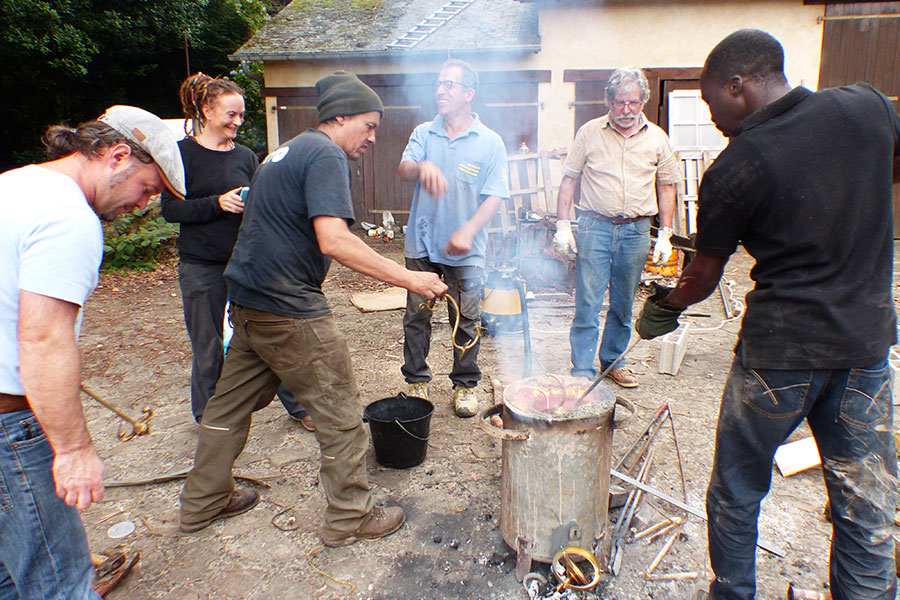
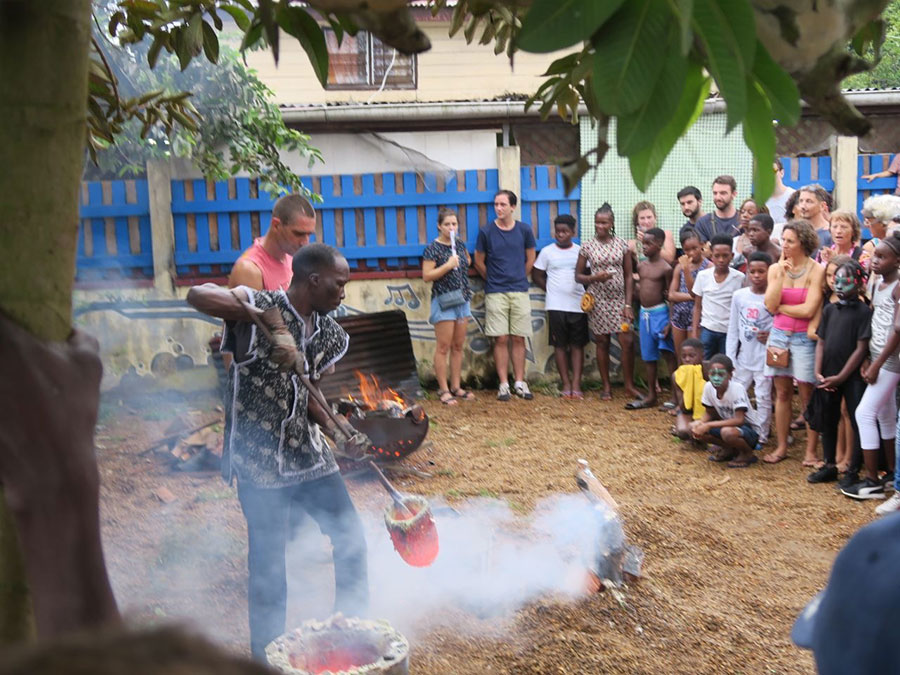
Assister à une coulée participe d'un moment privilégié, digne d'une incursion au royaume des Dieux.Parc Naturel Régional Normandie-Maine
Each requires precision, patience and finesse. From wax modeling to the ultimate patina, the sculpture is built with matter, time and fire.
The artist sculpts a model in beeswax, translating the idea into volume with precision. Wax, soft and malleable when warm, allows for a fineness of detail impossible to achieve directly in metal.
This is where the form is born: the hand becomes the first editor, removing, adding, modeling until the right balance.
Duration: from several days to several weeks depending on complexity
The wax model is wrapped in three successive clay layers. The first, very fine, hugs every detail. The following ones, thicker, reinforce the structure.
Once dry, the whole forms a compact block that still contains the wax, ready to give up its place.
Drying: several days in the open air
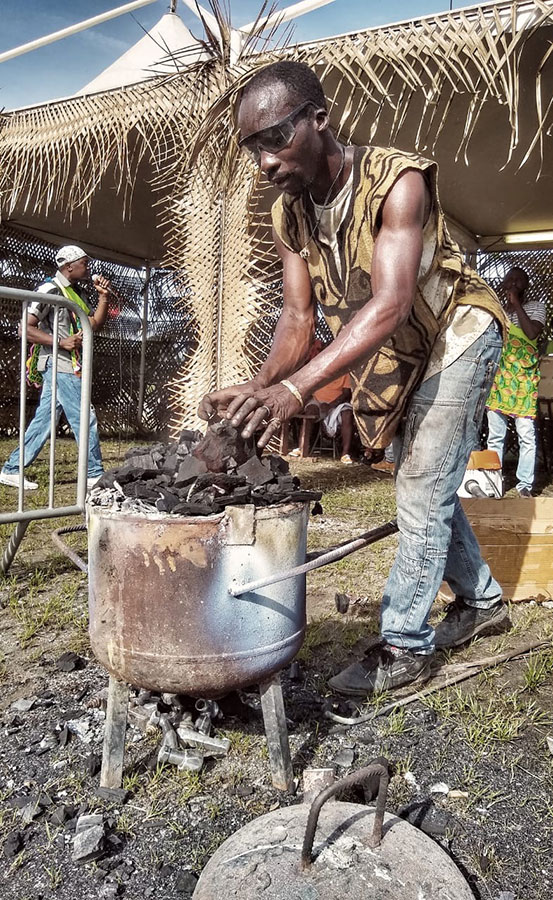
The heated mold releases the wax, which flows out through vents. The piece becomes hollow: this is the “lost” wax.
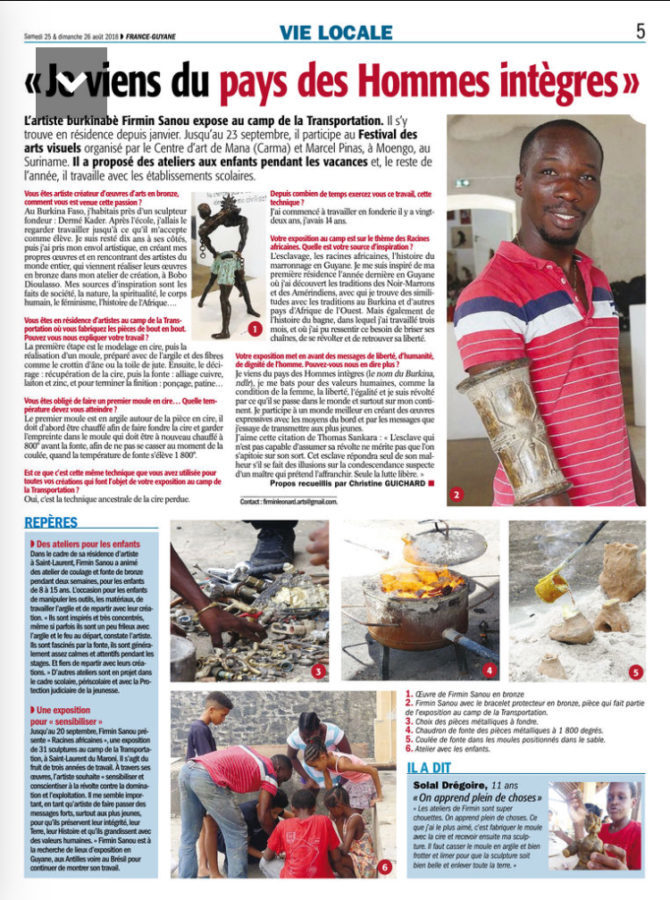
Molten bronze at 1800° is then poured at 800° into the incandescent mold. The metal fills the exact place of the wax, down to the smallest details.
The crucial moment: a few seconds decide everything
Breaking the mold reveals the piece. The sculptor enters the final phase: sanding, chiseling, polishing give the work its definitive skin.
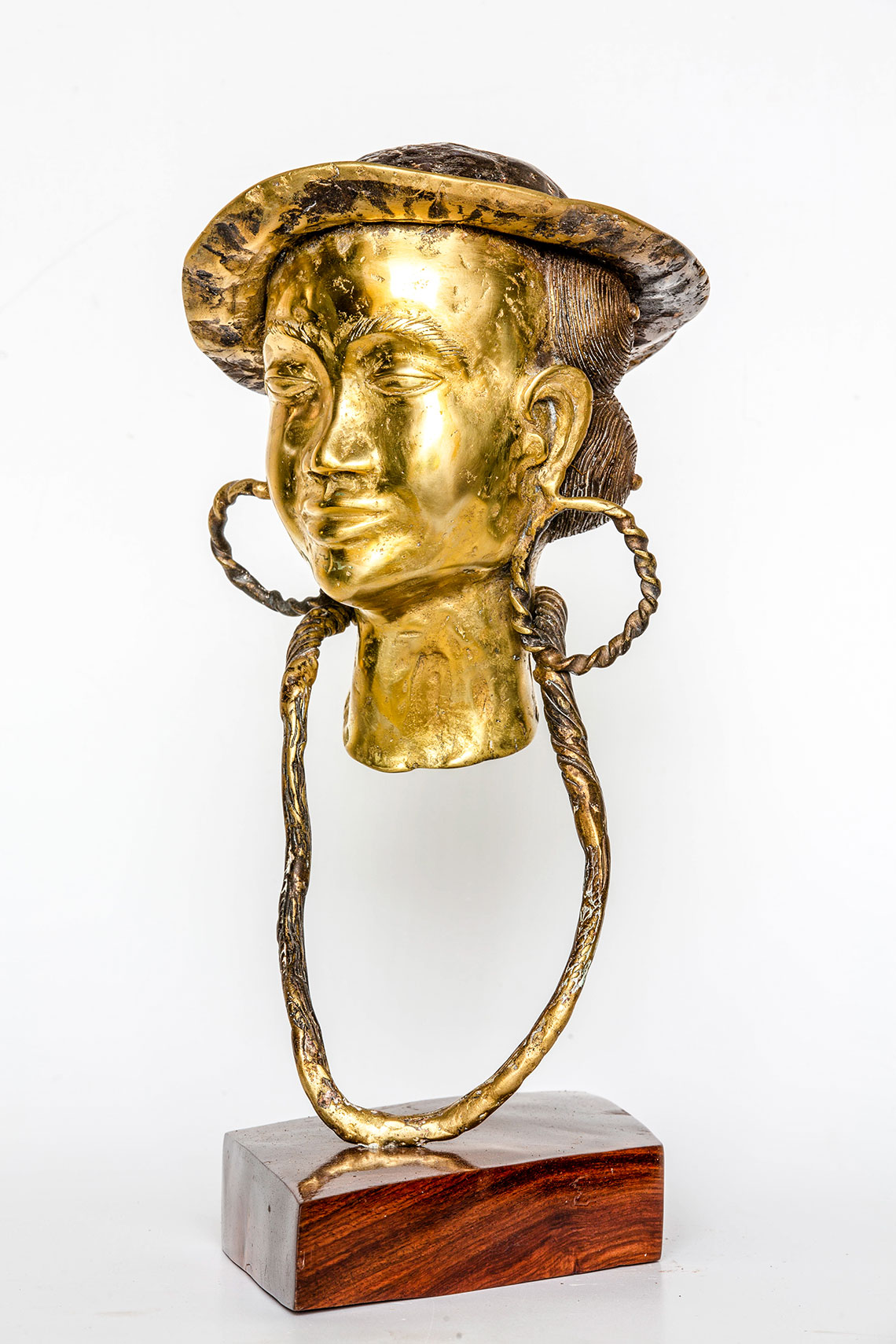
The patina, applied warm with oxides, then awakens shadows and reflections. Each patina tells a story: black bronze, verdigris, golden, raw.
Finishing: several days of meticulous work
Firmin Sanou offers initiation workshops to discover the whole process, from modeling to pouring.
View the workshops